Which is Better Value? Sigma 17-40mm f/1.8 DC Art vs Sigma 135mm f/1.4 DG Art Compared
In the evolving landscape of digital photography, Sigma has carved out a prestigious reputation with its Art series, a line dedicated to high-performance optics that often challenge the traditional dominance of first-party lens manufacturers. Professionals and enthusiasts alike frequently find themselves at a crossroads when deciding where to invest their capital, particularly when choosing between versatile zooms and specialized primes. The comparison between the Sigma 17-40mm f/1.8 DC Art and the Sigma 135mm f/1.4 DG Art represents a unique study in value, utility, and artistic intent. While these lenses serve vastly different purposes—one being a wide-to-standard zoom for crop sensors and the other a heavyweight telephoto prime for full-frame systems—the decision-making process often revolves around which piece of glass will provide the greatest return on investment in a photographer's specific workflow.
When we discuss value in the context of high-end optics, it is rarely just about the price tag. It is about the ratio of performance to cost, the durability of the build, and how often the lens will actually stay mounted on the camera. The 17-40mm f/1.8 and the 135mm f/1.4 are both engineering marvels, but they cater to distinct demographics. One is built for the street, the travel vlog, and the documentary filmmaker, while the other is a surgical tool designed to isolate subjects with a level of shallow depth of field that was once thought impossible at this focal length. This article dives deep into the technical specifications, real-world usability, and long-term value propositions of these two titans of the Art line.
Analysis: The Sigma 17-40mm f/1.8 DC Art
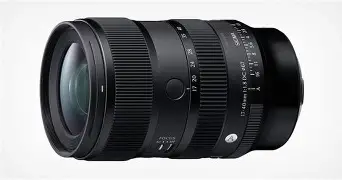
The Sigma 17-40mm f/1.8 DC Art is a lens that defies the historical limitations of zoom optics designed for APS-C (crop) sensors. Traditionally, zoom lenses for these systems were often relegated to "kit" status or limited to f/2.8 apertures. By maintaining a constant f/1.8 maximum aperture throughout the zoom range, Sigma provides crop-sensor users with the light-gathering capabilities and depth-of-field control usually reserved for full-frame f/2.8 zooms or dedicated primes. This lens covers an effective focal range of approximately 25-60mm in full-frame terms, making it a "sweet spot" walkaround lens for a variety of genres.
From a construction standpoint, the 17-40mm carries the familiar Art series aesthetic: a heavy, thermally stable composite (TSC) barrel, a smooth internal focusing mechanism, and a weighty feel that inspires confidence. Optically, the inclusion of several Special Low Dispersion (SLD) and aspherical elements ensures that chromatic aberration is kept to a minimum, even when shooting wide open at f/1.8. For the event photographer or the journalist, this lens is a workhorse. It allows for quick transitions from wide environmental portraits to tighter, more intimate shots without the need for a lens change, all while retaining a fast aperture that is critical in dimly lit venues.
However, the "DC" designation is a crucial factor in the value equation. Because it is designed for APS-C sensors, full-frame users will experience significant vignetting if they attempt to use it on a high-resolution full-frame body without engaging a crop mode. This limits its long-term versatility for those planning to migrate to full-frame systems in the near future. Nevertheless, for the dedicated APS-C shooter, this lens often replaces three separate primes (24mm, 35mm, and 50mm equivalents), offering immense value through consolidation.
Pros and Cons of the 17-40mm f/1.8 DC Art
- Pros: Revolutionary constant f/1.8 aperture in a zoom lens provides exceptional low-light performance for APS-C users.
- Pros: Exceptionally sharp throughout the focal range, rivaling the performance of many dedicated prime lenses.
- Pros: Internal zoom and focus design means the physical length of the lens does not change, which is a major advantage for gimbal users.
- Pros: Excellent value for money for those who want prime-like quality with zoom convenience.
- Cons: Limited to APS-C sensors, which may be a drawback for photographers looking to move to full-frame hardware.
- Cons: Significant weight and size for a crop-sensor lens can make it feel unbalanced on smaller mirrorless bodies.
- Cons: Lacks built-in optical stabilization, making it dependent on the camera's in-body image stabilization (IBIS) for handheld low-shutter work.
Analysis: The Sigma 135mm f/1.4 DG Art
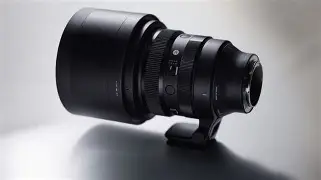
On the other end of the spectrum lies the Sigma 135mm f/1.4 DG Art, a lens that exists at the absolute zenith of optical engineering. The 135mm focal length has always been a favorite for portrait and fashion photographers due to its flattering compression and subject isolation. However, by pushing the aperture to f/1.4—a full stop faster than the industry standard f/1.8 or f/2 variants—Sigma has created an "edge case" lens that delivers a look that is almost medium-format in its aesthetic. This is a "DG" lens, meaning it is fully compatible with full-frame sensors, utilizing the entire imaging circle for maximum resolution and bokeh quality.
The "value" of a lens like the 135mm f/1.4 is found in its ability to create images that other lenses simply cannot replicate. The transition from the razor-sharp plane of focus to the creamy, melted background (bokeh) is nothing short of spectacular. This makes it a high-value asset for wedding photographers shooting ceremonies from the back of a church or sports photographers needing to isolate an athlete against a cluttered stadium background. Because of the f/1.4 aperture, the lens is physically massive, featuring a huge front element that requires 105mm filters. This is not a lens for casual walkaround photography; it is a specialized tool for high-stakes projects where image quality is the only metric that matters.
Build quality is industrial-grade, featuring extensive weather sealing and a dedicated tripod collar. The Hyper Sonic Motor (HSM) is tuned for speed, which is necessary to move the substantial glass elements within the barrel. While the price is significantly higher than its zoom counterpart, the 135mm f/1.4 is often viewed as a "career lens"—a piece of equipment that will remain relevant and high-performing for a decade or more, regardless of how many camera bodies it outlives.
Shop the latest Cameras & Photography picks on Amazon.
Browse Now →Pros and Cons of the 135mm f/1.4 DG Art
- Pros: Unrivaled subject isolation and "3D pop" due to the combination of 135mm focal length and f/1.4 aperture.
- Pros: Impeccable build quality with professional-grade weather sealing for use in harsh environments.
- Pros: Highly compatible with full-frame and crop sensors, providing a long-term investment path for professionals.
- Pros: Best-in-class sharpness even at the widest aperture, requiring almost no stopping down for clinical results.
- Cons: Extreme weight and bulk make it a challenge to carry for long durations without a tripod or monopod.
- Cons: High entry price and expensive 105mm filter requirement increase the total cost of ownership significantly.
- Cons: Very narrow depth of field at f/1.4 makes it difficult to nail focus on moving subjects without advanced eye-autofocus systems.
Comparative Specifications
To better understand where these lenses sit in relation to one another, it is helpful to look at the technical data side-by-side. While the use cases differ, the technical overhead of each lens reveals much about why they are priced and weighted the way they are.
| Feature | Sigma 17-40mm f/1.8 DC Art | Sigma 135mm f/1.4 DG Art |
|---|---|---|
| Sensor Compatibility | APS-C (DC) | Full Frame (DG) |
| Maximum Aperture | f/1.8 | f/1.4 |
| Lenses/Groups | 17 Elements / 12 Groups | 14 Elements / 10 Groups |
| Filter Size | 72mm | 105mm |
| Diaphragm Blades | 9 (Rounded) | 9 (Rounded) |
| Minimum Focus Distance | 0.28m | 0.87m |
| Weight | 810g | 1,750g |
| Primary Use Case | Street, Documentary, General Purpose | Portrait, Fashion, Low-Light Sports |
Direct Comparison: Versatility vs. Specialization
When choosing between these two lenses, the primary debate is one of versatility versus specialization. The 17-40mm f/1.8 represents the ultimate in convenience for the modern content creator. If you are a crop-sensor shooter, this lens essentially lives on your camera. It covers the wide-angle requirements for landscape and interior shots while zooming in enough to handle environmental portraits and standard life-style photography. Its constant aperture makes it a favorite for video work, where changing aperture during a zoom can ruin a shot. Its value lies in the fact that it is the "only lens you need" for about 80% of common photographic tasks.
The 135mm f/1.4, conversely, is a lens of pure specialization. You do not buy this lens to "see what happens" on a casual stroll. You buy it because you have a specific vision that requires a specific look. Its value is found in the "wow factor" of the output. In a competitive market where many photographers are using standard 24-70mm or 70-200mm zooms, the 135mm f/1.4 gives you a distinct visual signature. It creates a dreamlike quality that is difficult to replicate in post-processing. Therefore, its value is tied to its ability to help a professional stand out from the crowd and justify higher rates for their work.
Another factor in the value comparison is the "system longevity." The 17-40mm f/1.8 is a brilliant lens, but it is anchored to the APS-C ecosystem. As photographers grow, many eventually move to full-frame sensors. The 17-40mm loses much of its utility in that transition. The 135mm f/1.4, as a "DG" lens, is built for the highest tier of full-frame sensors. It will likely perform just as well on a 100-megapixel sensor five years from now as it does on a 24-megapixel sensor today. From a long-term investment standpoint, the 135mm f/1.4 is arguably the "safer" place to put your money if you view photography as a multi-decade journey.
Buying Guide: Which Camera Bag Should These Inhabit?
Determining which lens represents better value for you requires an honest assessment of your gear and your goals. Consider the following scenarios to help narrow down the choice:
Scenario A: The Hybrid Content Creator
If you primarily use a crop-sensor mirrorless or DSLR camera and your work involves a mix of photography and videography, the Sigma 17-40mm f/1.8 DC Art is the clear winner for value. The ability to maintain a f/1.8 aperture while zooming is a game-changer for video production, allowing for consistent exposures. It is lighter than the 135mm and far more practical for travel or event coverage where you cannot always step backward or forward to frame your shot.
Scenario B: The Dedicated Portrait Professional
If your income depends on high-end portraits, weddings, or fashion editorials, the Sigma 135mm f/1.4 DG Art is the better value, despite its higher price. It is a lens that pays for itself through the quality of the final galleries. The unique look it provides—extreme sharpness on the eyes with a foreground and background that completely disappear—is exactly what high-paying clients expect from a professional. It is a heavy-duty tool for a heavy-duty job.
Scenario C: The Budget-Conscious Upcycler
For those shooting on a budget but eyeing a full-frame future, the decision is tricky. While the 17-40mm is cheaper, buying it now only to sell it later at a loss when you upgrade to full-frame may reduce its total value. In this case, saving longer for the 135mm f/1.4—or perhaps a more modest f/1.8 prime—might be the more financially sound decision in the long run. However, if you need a lens today to start your business, the 17-40mm provides immediate utility that the 135mm cannot match in tight spaces.
Shop the latest Cameras & Photography picks on Amazon.
View Offers →Mechanical Reliability and Handling
In the field, these lenses handle very differently. The 17-40mm f/1.8 is surprisingly dense for its size, but it feels robust. The zoom ring is well-damped, which is essential for precise framing. One often overlooked aspect of its value is the internal zoom mechanism. Because the lens does not expand, there is a lower risk of drawing dust or moisture into the barrel—a common failure point for cheaper zoom lenses. This contributes to a longer lifespan and better resale value over time.
The 135mm f/1.4 is a physical trial to use. After an hour of shooting handheld, most photographers will feel the strain in their wrists and forearms. This lens demands respect and, often, a tripod. However, Sigma has included a very high-quality tripod foot that is Arca-Swiss compatible, meaning you can slide it directly into most tripod heads without adding an extra plate. This small touch adds significant value for studio and landscape photographers who work off sticks. The manual focus ring is oversized and exceptionally smooth, allowing for the micro-adjustments necessary when working with the paper-thin depth of field at f/1.4.
Autofocus performance on both lenses is excellent, but they are limited by the camera bodies they are attached to. On modern mirrorless systems with Eye-AF, the 135mm f/1.4 is surprisingly reliable. On older DSLR systems, you may find yourself needing to calibrate the lens using Sigma’s USB Dock to ensure the focus is hitting exactly where it should. This dock compatibility is a hidden value-add for the Sigma ecosystem, allowing users to update firmware and customize focus behavior without sending the lens to a service center.
Conclusion: The Verdict on Value
Choosing between the Sigma 17-40mm f/1.8 DC Art and the Sigma 135mm f/1.4 DG Art is ultimately a choice between a "swiss-army knife" and a "scalpel." The 17-40mm f/1.8 offers better value for the majority of photographers, especially those working within the APS-C ecosystem. It is a versatile, high-performance lens that can handle almost any situation thrown at it, from a dark concert hall to a bright landscape. It consolidates the need for multiple primes into a single, relatively affordable package, making it the definition of high-value gear.
However, for the photographer who has moved beyond general-purpose shooting and into a niche that requires the absolute best in optical performance and subject isolation, the 135mm f/1.4 DG Art is the superior value. Its value is not measured in "shots per dollar," but in the "impact per shot." It is a specialized instrument that delivers a world-class aesthetic, and for the professional whose brand is built on that look, there is no substitute.
The 17-40mm f/1.8 is the lens you buy to get the job done efficiently and reliably day in and day out. The 135mm f/1.4 is the lens you buy when you want to remind everyone—including yourself—why photography is an art form. Both lenses represent the pinnacle of what Sigma has achieved with the Art series, and both are worthy of a place in a professional's kit, provided they are chosen for the right reasons. Assess your current sensor format, your most common shooting distances, and your tolerance for weight, and the better value choice will become clear.