Spec Battle: Macos Tahoe vs Bosgame Gvp7600 Egpu Docking Station — Is It Worth Upgrading?
Category: Laptops
Introduction
When a user faces a performance bottleneck on a laptop, two familiar options emerge: replace the machine with a newer model or augment the existing system with external hardware. The debate between buying a newer Mac (here referred to as the Macos Tahoe lineup) and investing in an external GPU docking station (represented by the Bosgame Gvp7600 eGPU Docking Station) captures that crossroads. Each path promises different benefits and trade-offs in raw power, portability, compatibility, and long-term value.
This article examines those trade-offs in practical terms. It outlines what buyers typically care about—real-world performance, software compatibility, cost efficiency, battery and thermal behavior, portability, and upgradeability—then dives into a comparative analysis so readers can decide which route makes sense for their workflow.
Product overviews: what each option represents
Macos Tahoe (the upgrade path)
In this piece, "Macos Tahoe" refers to a modern Mac laptop upgrade path: a new-generation Apple laptop offering updated silicon, improved battery life, better integrated GPU performance, and tighter system integration with macOS. Upgrading to a new Mac typically gives immediate and predictable gains in CPU performance, single-thread and multi-thread efficiency, storage speed, and the latest platform features.
For buyers who value a straightforward experience—install the OS, migrate configuration, and have everything work seamlessly—buying a new Mac tends to be the low-friction option. The hardware, firmware, and macOS updates come from the same vendor, and most professional software vendors optimize their macOS builds for the latest Apple silicon.
Bosgame Gvp7600 eGPU Docking Station (the augmentation path)
The Bosgame Gvp7600 is presented here as a representative Thunderbolt eGPU docking station that combines an external GPU enclosure with docking conveniences: multiple USB ports, gigabit or multi-gig Ethernet, display outputs, and power delivery to the host. An eGPU dock promises targeted GPU acceleration—allowing a laptop to gain significantly higher graphics horsepower without replacing the entire system.
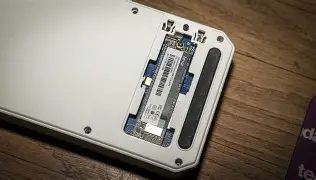
For many users, an eGPU dock is attractive because it isolates the graphics upgrade as a separate investment. A single dock can serve multiple machines (desktop or laptop), and a user can offset cost by swapping the GPU card later. The caveat is that the host platform must support an eGPU over Thunderbolt and the operating system must provide drivers and functional plumbing.
Detailed analysis: performance, compatibility, and day-to-day impact
Performance characteristics
New Mac (Macos Tahoe): A new Mac brings balanced improvements across CPU, GPU, storage, and power efficiency. For CPU-heavy tasks—compiling, virtualization, data science preprocessing—upgrading the whole system often yields the largest gains. Apple’s integrated GPU performance has also advanced quickly, narrowing the gap with some discrete GPUs for many creative workloads.
Bosgame eGPU Dock: The eGPU route focuses primarily on GPU-bound tasks: 3D rendering, real-time visual effects, gaming performance, machine learning inference workloads that use CUDA or OpenCL, and GPU-accelerated video encoding/decoding. If the existing laptop has a capable CPU and fast NVMe storage, plugging in an external GPU can transform creative apps (DaVinci Resolve, Adobe Premiere with GPU-accelerated effects) and games. However, the Thunderbolt link is a bottleneck compared with PCIe x16 in a desktop: expect some performance overhead (often a 10–30% penalty compared to the same GPU on an internal PCIe slot), depending on workload and drivers.
Looking for the best Laptops & Computers deals on Amazon?
View Offers →Software and OS compatibility
New Mac: Software compatibility is usually seamless—macOS updates, drivers, and hardware are controlled by Apple, so bits work together. Developers optimize for Apple silicon, and many pro apps have native ARM builds. This integrated approach reduces surprises.
Bosgame eGPU Dock: Compatibility is the trickiest area. Historically, macOS supported eGPUs on Intel-based Macs via Thunderbolt with vendor drivers for AMD or NVIDIA cards. However, changes in Apple's platform direction (notably with Apple silicon) affect eGPU support and driver availability. Buyers must check whether the existing laptop supports eGPUs, whether the GPU they plan to use has macOS drivers, and whether their software will take advantage of an external GPU. On Windows hosts, eGPU support is broader, but still subject to driver maturity and potential configuration quirks.
Portability and daily workflow
New Mac: A new laptop maintains portability: the whole system is lighter, smaller, and self-contained. Users who travel or work in multiple locations generally prefer a single machine that doesn’t require peripherals to obtain full performance.
Bosgame eGPU Dock: An eGPU dock is an accessory that reduces portability. While the dock may allow the laptop to stay thin and light for travel, full performance requires docking in a fixed place. For users with a dedicated home office or studio, that is acceptable and often desirable. However, for frequent travelers, an eGPU’s utility is limited unless they have access to the dock at each location.
Thermals, noise, and power
New Mac: Modern laptop designs manage thermals and power efficiently; a new Mac generally delivers cooler operation and quieter fans for mainstream workloads than older devices under similar loads. Apple’s integration often results in better battery life despite higher sustained performance.
Bosgame eGPU Dock: Offloading GPU heat to an external enclosure reduces the laptop’s thermal stress and can improve sustained CPU performance. Conversely, the dock introduces its own heat and noise profile, which needs room and ventilation. Power requirements can be substantial; many high-end GPUs require a robust PSU in the dock and adequate power delivery for the laptop.
Pros & Cons
Macos Tahoe (upgrade)
- Pros: Seamless macOS integration, guaranteed driver/firmware support, improved battery life, balanced CPU/GPU/storage upgrades, better portability and unified warranty.
- Cons: Higher upfront cost to replace the entire system, less modularity (cannot upgrade GPU later), potential for overpaying if only GPU or a single component is the bottleneck.
Bosgame Gvp7600 eGPU Docking Station (augment)
- Pros: Focused GPU performance boost without replacing the whole laptop, modular upgrade path for GPUs, additional ports and networking in a single peripheral, potential cost savings if the CPU/storage are still adequate.
- Cons: Compatibility and driver uncertainty (especially on newer macOS/Apple silicon), Thunderbolt bandwidth limits, extra desktop footprint, added power/noise, potential for complex setup and software tuning.
Comparison table
| Category | Macos Tahoe (Full Upgrade) | Bosgame Gvp7600 eGPU Dock (Add-on) |
|---|---|---|
| Primary benefit | Balanced system-wide performance and portability | Targeted GPU acceleration and expanded I/O |
| Cost profile | Higher upfront cost (new machine) | Lower to moderate (dock + GPU) but variable depending on GPU choice |
| Compatibility | High (OS and hardware vendor alignment) | Variable; dependent on host OS, Thunderbolt implementation, and drivers |
| Performance ceiling | High for general workloads; integrated improvements across the board | High for GPU workloads but limited by Thunderbolt bandwidth and driver overhead |
| Portability | Excellent; single device | Poor; dock is fixed, laptop remains portable but not with GPU |
| Upgradeability | Limited—mostly by what Apple allows | High—swap GPU, upgrade dock peripherals over time |
| Thermals | Managed internally; improved over older models | Offloads GPU heat externally; adds noise and power footprint |
| Best for | Users needing overall system improvements, portability, and simplicity | Users needing GPU horsepower for stationary workflows without replacing laptop |
Real-world use cases: who benefits from which choice
Photographers and general content creators: If the workflow is predominantly CPU-bound (editing, cataloging, exporting many single-threaded tasks), a full Mac upgrade typically yields the most noticeable improvement. If the workload heavily uses GPU-accelerated effects—real-time color grading with heavy effects or complex playback—an eGPU can yield targeted gains without leaving behind a currently-good laptop.

Video editors and colorists: These professionals often benefit most from GPU acceleration. If the studio is stationary and requires the highest possible GPU performance for timelines, an eGPU dock with a powerful desktop-class GPU is a cost-effective route that preserves the portability of a thin laptop. However, if mobility with high performance is needed, a new Mac with stronger integrated GPU may be preferable.
3D artists and game developers: For GPU-heavy rendering and previewing, an eGPU can accelerate viewport performance and offload long renders. For developers who also need maximal portability and predictable support for toolchains, a new Mac may reduce the frequency of edge-case driver issues.
Find top-rated Laptops & Computers products at great prices.
See Deals →Researchers and ML practitioners: Machine learning benefits from specific GPU architectures (e.g., CUDA support on NVIDIA). eGPU docks allow desktop-class GPUs to be paired with a laptop, but macOS limitations and driver availability can be a blocker. For Windows- or Linux-based workflows, eGPUs are often more practical. Buying a new Mac is only advantageous if the target ML stack supports the machine’s GPU capabilities.
Buying guide: how to decide and practical checklist
To choose between a Mac upgrade and the Bosgame-style eGPU dock, follow a structured checklist based on practical constraints and priorities.
1. Identify the primary bottleneck
- Run the tasks that feel slow and determine whether they are CPU-, GPU-, memory-, or I/O-bound. Use profilers or simple monitoring tools to observe CPU/GPU utilization during heavy workloads.
- If the GPU sits at near 100% and the CPU is idle during target tasks, an eGPU could be the more cost-effective fix. If CPU and storage are the bottleneck, a full machine upgrade is likely necessary.
2. Confirm compatibility
- Check whether the current laptop’s Thunderbolt implementation supports external GPUs and whether the OS has drivers for the GPU candidates. On Apple hardware, verify whether Apple silicon or the macOS version supports eGPUs in the desired configuration.
- Confirm the dock’s power delivery is sufficient for the laptop if one intends to charge through the dock, and ensure the dock’s GPU enclosure supports the chosen card’s length, height, and power requirements.
3. Evaluate portability needs
- If the user needs full performance on the go, an eGPU that remains docked at a single location is not ideal. For users who mostly work from a single desk, an eGPU is a solid choice.
4. Calculate total cost of ownership
- Include the dock purchase, the GPU card (new or used), any additional cables or adapters, and potential firmware/driver support costs. Compare that to the price differential between the current laptop and a new Mac that meets the performance needs.
- Consider resale value: a modern Mac typically retains resale value well; GPUs and docks may depreciate faster, but they can be reused across systems.
5. Consider future-proofing and upgradeability
- An eGPU dock provides modularity; swapping to a new GPU later is possible. A new Mac is less upgradeable but may provide longer software support horizons.
6. Check software-specific considerations
- Confirm whether the critical applications actually use external GPUs or benefit most from integrated Apple silicon optimizations. For specialized software (e.g., certain ML frameworks or custom CUDA tools), verify driver availability.
Setup tips and pitfalls to avoid
- Drivers and firmware: Update dock firmware and GPU drivers before undertaking heavy work. Outdated firmware can cause stability issues and surprising performance drops.
- Thunderbolt cabling: Use certified Thunderbolt cables rated for the dock and host. Passive or older cables may limit bandwidth.
- Power planning: Ensure the dock’s PSU can handle the GPU’s peak draw and the laptop’s power delivery if charging through the dock.
- Thermal placement: Provide the dock with ventilation and avoid enclosing it; GPUs need space to exhaust heat efficiently.
- Testing: Run representative benchmarks and real workflows after setup to verify expected gains and to tune settings.
Cost perspective and long-term value
Cost comparisons vary widely by configuration. Often, an eGPU dock plus a mid-range GPU can cost less than a top-tier Mac laptop, while delivering substantial GPU improvements for stationary use. Conversely, if a user also needs CPU and storage upgrades, consolidating into a full Mac upgrade can be more economical and simpler in the long term—particularly when considering software compatibility and warranty concerns.
For businesses and creative studios, factoring in downtime and support should also influence the decision: an integrated new machine typically requires less hands-on tuning and may reduce lost time due to configuration issues.
Conclusion
There is no universally correct answer—only choices aligned to a user’s priorities. If portability, minimal configuration hassle, and broad software compatibility are paramount, upgrading to a new Mac (represented here by the Macos Tahoe approach) tends to be the more robust and worry-free path. It delivers balanced, integrated improvements across CPU, GPU, storage, and battery life that most users will notice in day-to-day work.
By contrast, if the current laptop is otherwise sufficient and the missing piece is raw GPU horsepower for a stationary workstation, an eGPU docking station such as the Bosgame Gvp7600 can be a compelling, modular, and potentially cost-efficient solution—provided the host system and operating system support external GPUs and the user accepts the trade-offs in portability and the need for extra setup and monitoring.
Ultimately the decision should rest on a clear assessment of the bottleneck, realistic compatibility checks, and a cost comparison that includes future flexibility. For many professionals, the ideal approach is pragmatic: upgrade the machine when multiple subsystems are out of step with workload demands, and choose an eGPU dock when GPU performance alone is the limiting factor and a fixed desk setup is acceptable.