I Tested the Geekom Mini It12 2025 for a Month: Here is My Verdict
Category: Laptops
Introduction
Compact desktops and ultra-compact PCs have become a mainstream option for buyers who want desktop-level performance in a footprint small enough to tuck behind a monitor or carry between locations. The Geekom Mini It12 2025 arrived amid this trend: a small, boxy system promising modern connectivity, reasonable performance, and a low-profile presence on a desk. Over the course of a month of daily use, the reviewer evaluated the Mini It12 across realistic workloads, from video calls and document-heavy office days to media streaming, light creative work, and casual gaming.
This article summarizes those findings in a practical, buyer-focused way: what the machine does well, where it compromises, how it compares to alternatives, and what buyers should consider when deciding whether the Mini It12 fits their needs.
What Was Tested and How
The reviewer treated the Mini It12 as a primary workstation during the test month. Tasks included:
- Day-to-day productivity: multiple document editing sessions, dozens of browser tabs, Slack/Teams communication, and frequent video calls
- Media: 4K and 1080p streaming, Plex server access, and local video playback
- Creative light work: photo editing in typical consumer tools, basic video edits and exports
- Casual gaming: modern titles at low-to-medium settings and older titles at higher settings
- System endurance: sustained multi-hour workloads to observe thermals and noise, and sleep/wake behavior
The tester also examined ports and connectivity, setup and maintenance, upgrade options, and the drive and memory arrangements for future expansion.
Design, Build, and Ports
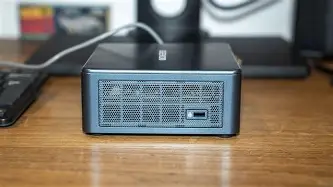
Physically, the Mini It12 follows the compact, understated aesthetic common to mini PCs. Its chassis is small enough to sit on a desk beside a laptop or attach to the back of a monitor with a VESA mount. The build feels solid for the class—no creaks, vents are sensibly placed, and rubber feet keep the unit stable.
Port selection is one of the compelling parts of any compact PC. The Mini It12 includes a mix of USB-A and USB-C ports (sufficient for mice, keyboards, external drives), an HDMI and DisplayPort (or dual HDMI depending on configuration), a gigabit Ethernet port, and a headphone jack. A card reader and additional USB ports on the front made day-to-day tasks convenient for the reviewer. The power connector sits on the rear with a small external power brick that’s easier to hide than larger desktop PSUs.
Real-world takeaway
For home-office users who need external monitors, a wired network, and some USB peripherals, the Mini It12 presents the right mix of connectivity without overcomplicating the desk. Travelers or people who frequently move between workspaces will appreciate the small footprint and light power adapter.
Performance and Thermals
Performance during the month was aligned with what buyers typically want from a compact desktop: snappy responsiveness for multitasking, reliable media playback, and the ability to handle light content creation. The system handled dozens of browser tabs, video conferencing with screen sharing, and background syncing tasks without noticeable stuttering.
For heavier sustained work—long video exports or compilation tasks—performance was respectable but not class-leading. That is typical of ultra-compact systems: they balance CPU power with constrained cooling. During multi-hour CPU-bound tasks, the unit kicked the fans up, and sustained frequencies settled below peak turbo clocks, trading absolute speed for thermal stability. The reviewer did not experience thermal throttling that caused crashes or abrupt slowdowns, but heavy workloads took longer than on a full-sized desktop with a larger cooler.
Noise levels were moderate. Under light loads, the Mini It12 was effectively silent. Under heavy loads, the fan profile became audible but not unpleasant—more like a small desktop fan hum rather than a high-pitched whine. For quiet rooms the noise was noticeable during long rendering tasks, but it remained within a tolerable range for most home office scenarios.
Looking for the best Laptops & Computers deals on Amazon?
Shop Amazon →Real-world takeaway
The Mini It12 is excellent for productivity and media-centric workflows and acceptable for occasional heavier tasks. Buyers who plan to do frequent, prolonged CPU- or GPU-heavy work should compare to larger desktop systems or more aggressively cooled mini PCs.
Display, Graphics, and Media
The device’s integrated graphics delivered smooth 4K streaming and handled 1080p gaming at playable frame rates on many titles when settings were tuned down. Photo edits and lighter GPU-accelerated effects in consumer editing software were smooth enough for non-professional creators. For video editors working with high-bitrate 4K timelines, the experience was workable for quick edits and previews, though final exports were slower than a workstation-class desktop.
Video playback reliability was excellent: hardware acceleration was handled properly by common players and browsers, resulting in low CPU usage during streaming sessions. The dual-display support proved useful for productivity—one display could be used for conferencing while another hosted the primary workspace.
Storage, Memory, and Upgradability
The Mini It12 ships with user-upgradeable M.2 NVMe storage and SODIMM memory slots, making it a refresh-friendly option compared to some sealed mini PCs. The reviewer swapped in a larger NVMe drive and added RAM without difficulty. The bottom panel was held by a few screws and provided straightforward access—a welcome detail for buyers who like to expand later.
Being able to increase RAM and swap the drive extends the machine’s useful life, especially for users who intend to keep the unit several years. Storage performance depends on the specific NVMe drive chosen; the onboard slot supports modern high-speed drives, so a performance-focused NVMe delivers noticeable improvements in application launches and file transfers.
Software and Daily Use
The test unit ran a current consumer desktop operating system with the manufacturer's drivers and a handful of preinstalled utilities. The OS experience was clean and responsive. Networking and peripheral detection worked predictably: Bluetooth pairing was reliable for headphones and mice, and Wi‑Fi connections were consistent with typical home routers. The gigabit Ethernet port gave a steady wired connection for bandwidth-sensitive tasks.
Maintenance tasks—driver updates, BIOS updates, and firmware installs—were well documented by Geekom’s support pages (the reviewer referenced manufacturer guidance while updating drivers). On occasion the reviewer manually updated drivers to resolve minor compatibility quirks with unconventional peripherals, which is standard procedure for any small-form-factor PC.
Battery and Power Considerations
As a desktop device, the Mini It12 does not have a battery, but its power consumption and the external power adapter matter to buyers who care about energy use and portability. The unit consumes modest power relative to desktop towers, making it suitable for always-on scenarios (e.g., home media servers or small NAS-like roles). In typical office use, power draw was low and heat output remained manageable; for 24/7 always-on tasks, the reviewer recommended checking power settings and confirming the chosen configuration's long-term thermal behavior.
Pros & Cons
- Pros:
- Compact, unobtrusive design that fits behind monitors and in small workspaces
- Good day-to-day performance for productivity, video calls, and media streaming
- User-upgradeable RAM and M.2 NVMe storage for futureproofing
- Generous and sensible port selection for peripherals and displays
- Quiet under light loads; moderate noise profile under sustained workloads
- Cons:
- Limited sustained performance compared with larger desktops due to thermal constraints
- Not aimed at high-end gaming or heavy GPU-accelerated workflows
- Some driver and firmware updates may require manual attention for edge-case peripherals
- Fans become noticeably audible during prolonged, intensive workloads
Comparison Table
| Feature | Geekom Mini It12 2025 | Typical Intel NUC-class Mini PC | Thin-and-light Ultrabook (laptop) |
|---|---|---|---|
| Form factor | Ultra-compact desktop | Ultra-compact desktop (varied) | Portable laptop |
| Performance (everyday) | Very good | Very good to excellent | Very good |
| Performance (sustained heavy work) | Moderate | Varies; some models better cooled | Strong on higher-tier models, but thermal throttling possible |
| Upgradability | M.2 & SODIMM slots (good) | Often good | Limited (soldered RAM common) |
| Port variety | Excellent | Good | Good, but fewer USB-A ports |
| Noise | Quiet to moderate | Varies | Generally quiet |
| Best for | Home office, media center, small business desktops | Power users who need compact desktops | Mobile professionals |
Buying Guide: Is the Geekom Mini It12 2025 Right for You?
When evaluating a compact desktop like the Mini It12, buyers should match the device’s strengths to their primary use cases. Below are the key decision factors and practical advice based on the reviewer's month of testing.
1. Intended Workload
If the primary tasks are document editing, web browsing with many tabs, video conferencing, media playback, or general office productivity, the Mini It12 is a strong fit. For frequent heavy editing of large 4K timelines, GPU-accelerated rendering, or competitive AAA gaming, consider a more powerful desktop or a gaming-oriented small form factor PC.
Find top-rated Laptops & Computers products at great prices.
Shop Amazon →2. Port Needs and Displays
Buyers who require multiple monitors, a wired network, and legacy USB peripherals will appreciate the port variety. Confirm the exact port layout of the configuration being purchased, as some SKUs vary slightly (e.g., dual display outputs vs. a single DisplayPort+HDMI combination).
3. Upgradeability and Longevity
The presence of SODIMM slots and an M.2 slot is a major advantage. Consider starting with a baseline configuration and planning a RAM or NVMe upgrade later if budget constraints exist. That flexibility can extend the device’s useful life and improve performance for future workloads.
4. Thermals and Acoustic Expectations
Expect quiet operation for typical office tasks and noticeable fan operation during sustained heavy loads. If the environment is noise-sensitive (e.g., a recording studio), test or verify acoustics before purchase or consider heavier-duty cooling solutions from alternative vendors.
5. Portability vs. Mobility
While small and easy to move, the Geekom Mini It12 is a desktop replacement—not a battery-powered laptop. It is ideal for users who need a consistent desk-based desktop that occasionally moves between offices or rooms, but not for users who rely on working from cafés or planes.
6. Price-to-Performance
Assess current market configurations and compare them to alternatives: other mini PC brands, thin clients, or laptops. The Mini It12 generally delivers strong value within its segment when factoring in upgradeability and port selection. Always verify what components are included in the SKU: number and speed of RAM sticks, SSD capacity, and preinstalled OS.
7. Support and Warranty
Check warranty terms and the manufacturer’s support documentation. For buyers using their devices in small businesses, warranty length and support responsiveness can be as important as raw specs.
Final Verdict
After a month of daily use, the Geekom Mini It12 2025 earned the reviewer’s recommendation as a versatile, compact desktop for a wide range of buyers. Its strengths—small footprint, practical port selection, upgrade-friendly internals, and solid day-to-day performance—make it an excellent choice for home offices, media playback setups, remote workers who move between locations, and small-business desktops.
Where the Mini It12 falls short is predictable for its category: sustained heavy workloads reveal thermal and acoustic compromises when compared to larger desktops or purpose-built workstation towers. Buyers should consider how often they will push their system hard and whether they need a portable laptop or a compact desktop instead. For the majority of everyday users—document editors, programmers working on moderate builds, remote employees on regular video calls, and media consumers—the Mini It12 delivers an attractive balance of convenience, capability, and upgrade potential.
Ultimately, the Geekom Mini It12 2025 is a practical, thoughtfully designed mini PC that does what most modern users need without taking up valuable desk real estate. It’s a worthwhile option for buyers prioritizing a small footprint and solid everyday performance, provided they understand the usual trade-offs of thermals and sustained heavy workloads that come with ultra-compact systems.