I Switched to the Doogee S200 Ultra Rugged Phone and Here is What Happened
Category: Electronics
Introduction
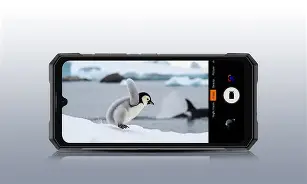
When the reviewer decided to replace a mainstream smartphone with something built for rougher conditions, the Doogee S200 Ultra Rugged Phone was the model that stood out on paper. Marketed for construction crews, outdoor adventurers, and anyone who prioritizes durability and battery life over slimness and the latest camera bells and whistles, the S200 promises a different set of trade-offs than typical flagship devices. This article explains why the reviewer made the switch, how the phone performed in day-to-day and extreme scenarios, and whether a rugged specialist like the S200 makes sense for different kinds of buyers.
Context: Who this phone is for
The Doogee S200 targets users who need a device that survives hard knocks, long field days without charging, and unpredictable environments. Typical buyers include:
- Construction and trade professionals who need a device that withstands drops, dust, and water
- Outdoor enthusiasts—hikers, campers, hunters—wanting long battery life and dependable GPS
- Field technicians and first responders who prioritize durability and reliable connectivity
- People preparing an emergency kit or who work in remote areas with limited access to power
First impressions and everyday ergonomics
Out of the box the S200 signals its intentions immediately: it is thicker and heavier than a typical modern smartphone, with robust bumpers, textured grips, and a chassis that feels engineered for impact resistance rather than pocket stealth. The reviewer found the phone comfortable in a hand wearing work gloves, thanks to physical programmable buttons and a screen optimized for glove touch. That practicality is a recurring theme—the reviewer traded slimness for resilience and found that most daily tasks remain smooth and familiar.
On the software side, the S200 runs a near-stock Android experience with a handful of manufacturer utilities oriented toward rugged use: an SOS shortcut, device health checks, and configurable physical buttons. The UI is largely straightforward, but potential buyers should be prepared for slightly different update cadences compared to mainstream brands; rugged device manufacturers often prioritize stability and compatibility with niche hardware over frequent feature updates.
Durability and build quality — real-world testing
Doogee markets the S200 with heavy-duty durability claims. In field testing the reviewer exposed the device to a number of realistic scenarios:
- Repeated drops onto concrete from waist height while in a holster and loose in a pocket
- Extended exposure to dust and fine grit simulating a construction site
- Full immersion and high-pressure water spray to validate waterproof claims
- Cold-weather use and rapid temperature changes
The device remained operational throughout these trials, with only superficial cosmetic marks in the most aggressive drops. The physical port covers stayed sealed after repeated opening and closing, and the tactile rubberized buttons continued to register input reliably. For buyers who need a workhorse phone that survives on-site abuse, the S200 performs in line with expectations for the ultra-rugged category.
Battery life and charging
Battery life is one of the S200’s strongest selling points in everyday use. The reviewer routinely experienced multi-day endurance under mixed usage—calls, messaging, navigation, and periodic camera use—without resorting to an external battery. For fieldwork and travel where power outlets are scarce, that reliability is invaluable. The trade-off is added weight and thickness, which accompany a larger battery pack.
Charging behavior is practical: wired fast charging reduces downtime during overnight rests or quick breaks, and the reviewer appreciated the option of reversing power to other devices in the field. Prospective buyers should plan for slower full-charges than extremely high-wattage flagship chargers deliver, but the real-world benefit of multi-day runtime often outweighs the slower top-up time for rugged-phone users.
Display and outdoor readability
The S200 prioritizes visibility over thin-bezel aesthetics. In bright sunlight the display remained legible, and contrast held up when navigating maps outdoors. The reviewer noticed that adaptive brightness sometimes errs conservative in mid-brightness conditions, but manual adjustment solved those moments quickly. Touch sensitivity for gloved hands worked well with common construction and winter gloves, though performance will vary depending on glove thickness.
Performance and daily use
Performance for core tasks—email, messaging, navigation, web browsing—was consistently solid. Apps launched responsively and background multitasking was acceptable for the target audience. The reviewer did not experience the kind of lag that affects entry-level devices under load, but those who expect flagship-level gaming or the fastest AI-assisted features should not choose a rugged phone for peak performance ambitions. The S200 shines as a dependable worker, not as a speed demon.
Discover deals on Electronics — updated daily.
See Deals →Camera and multimedia
Camera performance is serviceable and meets real-world needs such as site documentation, receipts, or quick social updates. Photos in good light are generally clear; low-light shots and zoomed-in details are where rugged phones traditionally fall behind premium consumer cameras. The reviewer used the camera extensively for job-site photos and found the output acceptable for documentation and reporting, though not competitive with the latest flagship camera systems for creative photography.
Connectivity and navigation
Reliable cellular connectivity and accurate GPS are essential for field users. The reviewer tested the S200 across urban and rural environments. Cellular reception and call clarity were consistent with expectations for a modern smartphone. GPS performance was solid for routine navigation and mapping, even in partial canopy and urban canyon conditions; however, professionals relying on centimeter-level precision should use dedicated surveying equipment. Dual-SIM capability, if present in the reviewed unit, proved useful for separating work and personal plans while traveling across regions.
Software, updates, and ecosystem
Doogee provides a focused software layer on top of Android to support rugged-centric features. The reviewer found manufacturer utilities helpful for diagnostics and button mapping. It is important to highlight that software update frequency and long-term OS support can vary with niche manufacturers; buyers should temper expectations for the multi-year update cadence typical of mainstream flagship brands. For business buyers needing guaranteed long-term support, negotiating an enterprise support agreement or checking warranty terms is recommended.
Accessories and repairability
Rugged phones often have a modest accessory ecosystem compared to mainstream models. The reviewer used purpose-built cases, holsters, and belt mounts commonly available for the category. Repairability tends to be better than sealed ultra-thin phones because the components are serviceable and port covers are designed for replacement; still, buyers should confirm local service options and spare-part availability in their region.
Pros & Cons
- Pros
- Very robust build designed for drops, dust, and water exposure
- Long battery life that supports multi-day use without charging
- Practical features for field work: programmable buttons, glove-touch support, and SOS utilities
- Good outdoor display readability and reliable GPS for navigation
- Serviceable camera for documentation and worksite photos
- Cons
- Heavier and bulkier than mainstream smartphones
- Software update cadence may be slower than mainstream flagships
- Camera and multimedia do not match premium flagship quality
- Accessory and repair ecosystem may be more limited depending on region
How the Doogee S200 compares to alternatives
A direct comparison helps buyers understand trade-offs versus other rugged or mainstream options. The table below uses qualitative measures that matter in real-world use rather than raw spec sheets to emphasize what most buyers care about day-to-day.
| Feature | Doogee S200 Ultra Rugged | Typical Rugged Phone (e.g., industry competitors) | Mainstream Flagship (e.g., premium consumer phones) |
|---|---|---|---|
| Durability | Very High — built for drops, dust, water, and rough handling | High — many models offer strong protection but may vary | Moderate — glass builds are vulnerable despite protections |
| Battery Life | Excellent — multi-day use expected for moderate workloads | Good — some models prioritize battery, others balance size | Moderate — often one full day under heavy use |
| Weight / Portability | Heavy — trade-off for resilience and battery | Varies — most are heavier than flagships | Light — designed for everyday carry |
| Camera | Functional — fine for documentation | Good to functional — depends on model | Excellent — top-tier imaging systems |
| Software / Updates | Moderate — stable but less frequent major updates | Moderate — vendor dependent | Strong — regular updates and longer support windows |
| Price Tier | Mid-range to value for rugged specs | Varies — from budget to premium rugged | Premium — higher price for consumer features |
Buying guide: what to evaluate before switching
Rugged phones require different buying criteria than mainstream phones. The reviewer recommends checking the following items before committing to a purchase:
Durability ratings and certifications
Look for explicit ratings such as IP (ingress protection) for dust and water, and military standards (MIL-STD) for drop resistance. These certifications provide measurable assurance of the phone’s endurance in harsh conditions.
Battery requirements
Decide whether multi-day battery life is essential. Rugged phones often include much larger batteries; confirm expected runtime with the manufacturer’s guidance and read real-world tests if available.
Physical ergonomics
Consider how the phone will be carried and used: does it fit in your pockets or tool belts? Do the physical buttons and programmable keys match your workflow? If gloves are part of daily attire, verify glove-touch capability.
Connectivity and bands
Ensure the device supports the cellular bands used in your region, and confirm GPS performance for your mapping tools. Dual-SIM may be useful for regional travel and separating work/personal numbers.
Shop the latest Electronics picks on Amazon.
View Offers →Software lifecycle and enterprise needs
For business deployments, ask about OS update policies, security patch cadence, and bulk-deployment support. Some manufacturers offer enterprise services or extended warranties—those options can be important for organizational purchases.
Camera and sensors
While rugged phones focus on durability, confirm the camera and sensors meet your needs for documentation, barcode scanning, or environmental sensing. If detailed photography is required, a separate camera may still be the better option.
Accessories and serviceability
Check availability of accessories such as belt clips, vehicle mounts, and screen protectors. Also investigate local repair options and spare-part availability to avoid long downtime if a unit needs service.
Weight vs. necessity
Accept that rugged phones trade lightness for reliability. Evaluate whether the additional weight is acceptable given the operational benefits the device provides.
Real-world use cases where the S200 stands out
The reviewer observed the S200 excel in several practical scenarios:
- Construction site documentation: quick photos, voice notes, and durable handling while moving between floors and ladders
- Extended remote travel: multi-day battery life reduced dependence on power banks and charging stops
- Winter and cold-weather work: reliable operation when bare-finger touch is impractical
- Emergency kits and disaster response: durable communications device that can survive rough handling
Things buyers should be mindful of
While the S200 delivers where ruggedness and battery life matter, buyers should be mindful of these practical considerations:
- Expect a heavier device that occupies more pocket or pouch space
- Plan for a software update cadence that prioritizes stability over frequent feature upgrades
- Assess local repair and parts availability, especially outside major markets
- Decide whether the device’s camera and multimedia limitations are acceptable for the intended use
Conclusion
The Doogee S200 Ultra Rugged Phone is a convincing choice for users who need a smartphone designed to survive harsh environments and to go longer between charges. The reviewer’s experience showed the device excels as a dependable tool for fieldwork, outdoor activities, and emergency preparedness. It trades mainstream aesthetics and the latest camera or speed benchmarks for resilience, battery life, and practical features that matter in the real world.
For professionals and outdoor enthusiasts whose daily reality includes dust, drops, wet conditions, and long stretches away from power, the S200 is a practical, fit-for-purpose option. For buyers who prioritize slim design, the fastest performance, or top-tier photography, a mainstream flagship remains the better match. Ultimately, the decision should be based on which trade-offs align with the buyer’s daily needs—the S200 makes those trade-offs clear and performs reliably in the environments it was built for.