Difference Between Papier Photo Book and Agfaphoto Realimove Mc3X Explained
The photography and content-creation landscape contains many different products that serve distinct needs. At first glance, a printed product like the Papier Photo Book and a compact stabilized camera such as the Agfaphoto Realimove MC3X occupy very different parts of that landscape: one is a finished physical medium for displaying photographs, the other is a tool for capturing stabilized video and stills. This article explains the practical differences between them, dives into product details, highlights real-world use cases, and provides a buying guide so readers can decide which is right for their priorities.
Overview
Papier Photo Book
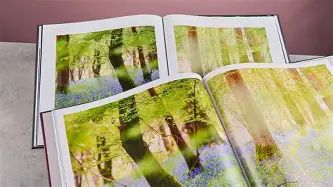
Papier Photo Book is a personalized printing service that enables photographers and consumers to create custom, professionally printed photo books. The product focuses on print quality, layout flexibility, and a polished end result suitable for gifts, portfolios, keepsakes, or retail-ready products. Users upload images to an online editor, choose sizes, paper finishes, bindings, and cover options, and order physical books that arrive ready to display.
Key elements that define the Papier Photo Book experience include a web-based design editor with templates, multiple paper and cover choices, options for layflat bindings or standard binding, and various page-count and size options. The brand emphasizes design-led templates and ease of use so both novice and experienced photographers can create a high-quality printed object without a steep learning curve.
Agfaphoto Realimove MC3X
The Agfaphoto Realimove MC3X is a pocket-sized gimbal camera built around a three-axis stabilization mechanism and a built-in touchscreen. It targets vloggers, travelers, and creators who want stabilized 4K video and an integrated, handheld form factor without needing a smartphone or a separate stabilizer. The MC3X typically offers 4K recording at 30 fps, higher-frame-rate options in lower resolutions (for slow motion), a wide-angle lens, face/object tracking modes, and a rotating touchscreen that simplifies self-recording.
Important characteristics of the MC3X include compact size and weight, a mechanical gimbal for smoothing motion, a small-but-capable image sensor optimized for daylight and everyday shooting, onboard controls for quick adjustments, and support for external microphones and microSD storage. The product is positioned as an affordable alternative to some pocket gimbal cameras with a focus on simplicity and a large display for framing.
Detailed product analysis
Papier Photo Book — product analysis
Printed photo books are judged on a handful of measurable criteria: paper quality and weight, ink and color fidelity, binding construction, layout options, and the overall tactile and visual finish. Papier’s offering centers on design-conscious templates and an editor that lets users control margins, bleeds, text overlays, and image placement. For photographers who care about print fidelity, the most important factors are:
Looking for the best Cameras & Photography deals on Amazon?
Browse Now →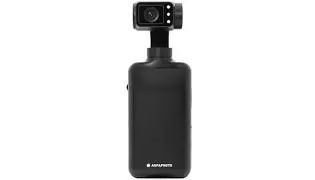
- Paper choice: Paper finish (matte, silk, or gloss-like options) affects perceived contrast and color saturation. Heavier paper and layflat bindings are preferred for full-bleed spreads, especially for wedding or landscape photography.
- Color management: Getting consistent results requires preparing images in the correct color space (typically sRGB for many consumer print services) and exporting at sufficient resolution (300 dpi is a common recommendation for print).
- Binding construction: Layflat binding reduces the center gutter and is desirable for panoramic spreads; sewn bindings and quality adhesives increase longevity.
- Design templates and customization: Ease of creating consistent, elegant layouts saves time — important for professionals producing multiple books.
- Tactile finishes and covers: Hardcover, fabric-bound, leatherette, and dust-jacket options change the perceived value of the book and are often chosen to match the book’s purpose (gift, portfolio, archive).
For many buyers, turnaround time and the availability of sample proofs or sample books also matter. Professional users often order a single copy as a proof before placing a larger order for clients.
Agfaphoto Realimove MC3X — product analysis
The MC3X is evaluated along camera-centric lines: sensor performance, stabilization efficiency, lens characteristics, audio quality, battery life, user interface, and accessory compatibility. Specific considerations include:
- Stabilization: A mechanical 3-axis gimbal provides a smoothing effect that electronic stabilization alone cannot match for walk-and-talk vlogging or moving shots. Buyers will compare gimbal performance (how quickly and smoothly the axes respond) and how the camera behaves when panning or changing orientation quickly.
- Image and video quality: The camera typically records 4K at 30 fps with options for higher frame rates at lower resolutions. The small sensor size common to pocket gimbal cameras means low-light performance is limited compared with larger-sensor mirrorless cameras, so daylight and controlled-light scenarios produce the best results.
- Screen and ergonomics: A large rotating touchscreen is a selling point for self-shooters, because it simplifies framing and menu navigation without a tethered smartphone.
- Audio: A 3.5 mm mic input is valuable for creators who want better sound than the onboard mics provide. Internal audio quality and access to external microphones influence whether the camera is usable for interviews or produced content.
- Workflow and connectivity: MicroSD storage, USB-C for file transfer and charging, mini-HDMI out for monitoring, and companion apps for quick social sharing or remote control all shape how the device fits into an existing workflow.
Practical buyers will consider firmware support and the ecosystem of accessories (tripod mounts, holders, protective cases) because these determine how the MC3X integrates into longer shoots or travel setups.
Side-by-side comparison
| Attribute | Papier Photo Book | Agfaphoto Realimove MC3X |
|---|---|---|
| Product type | Physical printed photo book (finished product) | Compact gimbal camera (capture device) |
| Primary use | Archiving, gifting, portfolios, printed presentation | Vlogging, travel video, stabilized handheld capture |
| Output | Tangible printed pages and covers | Digital video files and JPG/RAW stills |
| Customization | High — layouts, text, finishes, covers, paper | Moderate — shooting settings, mounts, external mic |
| Portability | Delivered as a finished book — portable but not “capture” equipment | Highly portable; pocketable for everyday carry |
| Skill requirement | Basic design sense; understanding of image resolution and color for best results | Camera operation skills help (exposure, framing); minimal technical setup for casual use |
| Durability | Depends on materials and handling; proper binding and cover increase longevity | Robust for casual use; sensitive electronics and gimbal require care |
| Best for | Photographers wanting a permanent, professional presentation of images | Creators who need stabilized motion capture in a compact form |
Pros & Cons
Papier Photo Book — pros & cons
- Pros:
- Physical, durable presentation suitable for display and gifting
- High perceived value for clients and recipients
- Wide customization options (size, paper, cover, layout)
- Good for archival and portfolio use when prepared correctly
- Cons:
- Turnaround time and shipping add delay compared with digital sharing
- Cost per copy can be significant for high-end paper and finishes
- Final color and contrast may vary from screen unless profiles/proofs are used
- Requires thoughtful image preparation (resolution, cropping, bleed)
Agfaphoto Realimove MC3X — pros & cons
- Pros:
- Three-axis gimbal gives very smooth handheld footage for walk-and-talk and travel shots
- Compact and easy to carry; integrated screen simplifies framing and vlogging
- 4K recording and high-frame-rate options for slow motion
- Accessory support (external mic, microSD, HDMI) enhances production flexibility
- Cons:
- Small sensor size limits low-light performance and dynamic range compared with larger-sensor cameras
- Battery life may be limiting for long shoots without spares or power banks
- Image quality is good for web and social; professionals may want higher-fidelity cameras for cinematic work
- Firmware and software stability can be variable on new or value-oriented devices
Real-world use cases
When Papier Photo Books shine
Papier Photo Books are well suited to occasions and workflows where a physical object matters. Examples:
- Wedding albums: Couples and professionals choose high-quality bindings and layflat pages to present wide, full-bleed wedding spreads.
- Portfolios: Photographers and designers can produce a small run of professional-looking portfolios for client meetings or interviews.
- Family keepsakes: Newborns, anniversaries, and travel journals are ideal uses where the tactile experience is part of the value.
- Gift books: Photobooks with curated text and images are often purchased as gifts that carry emotional value beyond a shared online gallery.
When the Agfaphoto Realimove MC3X is the right tool
The MC3X is most useful where stabilized motion recording and portability are central. Scenarios include:
Find top-rated Cameras & Photography products at great prices.
View Offers →- Travel vlogging: Compact form factor and stabilization make it ideal for creators roaming cities, trails, and markets.
- Social video and short-form content: Quick capture, a rotating screen for selfies, and internal stabilization reduce production time for reels and shorts.
- On-the-go interviews: With an external microphone connected, the MC3X can be a small field camera for short-form interviews and run-and-gun reporting.
- Everyday documentation: Users who want better-than-phone stabilization without lugging a mirrorless rig will find value in its integrated design.
Buying guide — how to choose
Choosing between a Papier Photo Book and the Agfaphoto Realimove MC3X is not about picking one as intrinsically “better” than the other. They accomplish different goals. Use the following checklist to decide which fits current needs, or whether both belong in the workflow.
Questions to ask first
- What is the primary goal? (Preserve/display finished images vs. capture stabilized motion footage.)
- What is the intended audience? (Clients and galleries often expect physical portfolios; social audiences expect frequent digital videos.)
- What is the budget? (Printed books have per-copy costs that scale; a camera is a one-time equipment purchase with accessory costs.)
- What are the workflow constraints? (Time to design and print a book vs. time to shoot and edit video.)
- How important is portability? (A small camera is carried daily; books are sent or carried for presentation.)
If considering a Papier Photo Book — practical tips
- Prepare images at print resolution: Export at 300 dpi and check pixel dimensions so images aren’t upscaled or soft in print.
- Use color-safe files: Work in sRGB unless the print provider specifies a different profile; soft-proof if possible.
- Choose binding for the content: Select layflat for panoramic spreads; choose lighter paper for lots of pages to keep the book manageable.
- Order a proof copy: If color fidelity is critical, one proof helps reveal any surprises before ordering multiple copies.
- Mind the gutter: Avoid placing critical content precisely in the center where the binding hides it.
If considering the Agfaphoto Realimove MC3X — practical tips
- Test stabilization modes: Walk, jog, and pan while recording to evaluate how the gimbal handles different movements.
- Prioritize audio: Use a quality external microphone for interviews or spoken content; run tests in the intended recording environment.
- Bring storage and power: Use fast microSD cards (check manufacturer recommendations) and carry a portable charger or spare battery for longer shoots.
- Optimize settings: Choose frame rates that match the project (e.g., 24/25/30 fps for narrative, 60 fps+ for slow motion) and lock exposure where necessary to avoid mid-shot pumping.
- Keep firmware updated: Regular firmware updates can improve stabilization, add features, and fix bugs; verify update procedures and compatibility first.
Workflows that combine both
Many creators will find value in using both: the MC3X to capture high-quality, stabilized video and stills for online content, and Papier to turn selected stills into a permanent, tactile collection. A sample workflow might be:
- Shoot travel and family moments with the MC3X, exporting the highest-quality stills and preferred video frames.
- Curate and edit chosen stills in a photo-editing app to correct color, crop, and sequence images for narrative flow.
- Create a book layout in the Papier editor with a consistent aesthetic and order, then order a single proof copy for verification.
- Share short video highlights online from MC3X footage while using the physical book for client meetings, exhibitions, or gifts.
Conclusion
The Papier Photo Book and the Agfaphoto Realimove MC3X address different stages of the photographic process: Papier provides a thoughtfully designed, physical end product for preservation and presentation, while the MC3X is a capture device that helps creators produce stabilized video and stills quickly and portably. Buyers who prioritize tangible presentation, archival quality, and a designed experience will lean toward printed photo books. Creators who need mobility, stabilized motion capture, and immediate digital content will find the MC3X compelling. For many photographers and content creators, the two are complementary — capture with a reliable, compact camera and present selected images as lasting printed objects when the moment calls for it.